
15-in-1 Table RFQs: Map Games to Included Parts
For a 15-in-1 table RFQ, list every supplier-named game and ask which playing surface, shared component and loose accessories support it. Keep the game count separate from the number of physical boards or parts. Ask the supplier to return an itemised list for the exact quoted table rather than relying on an all-accessories statement.
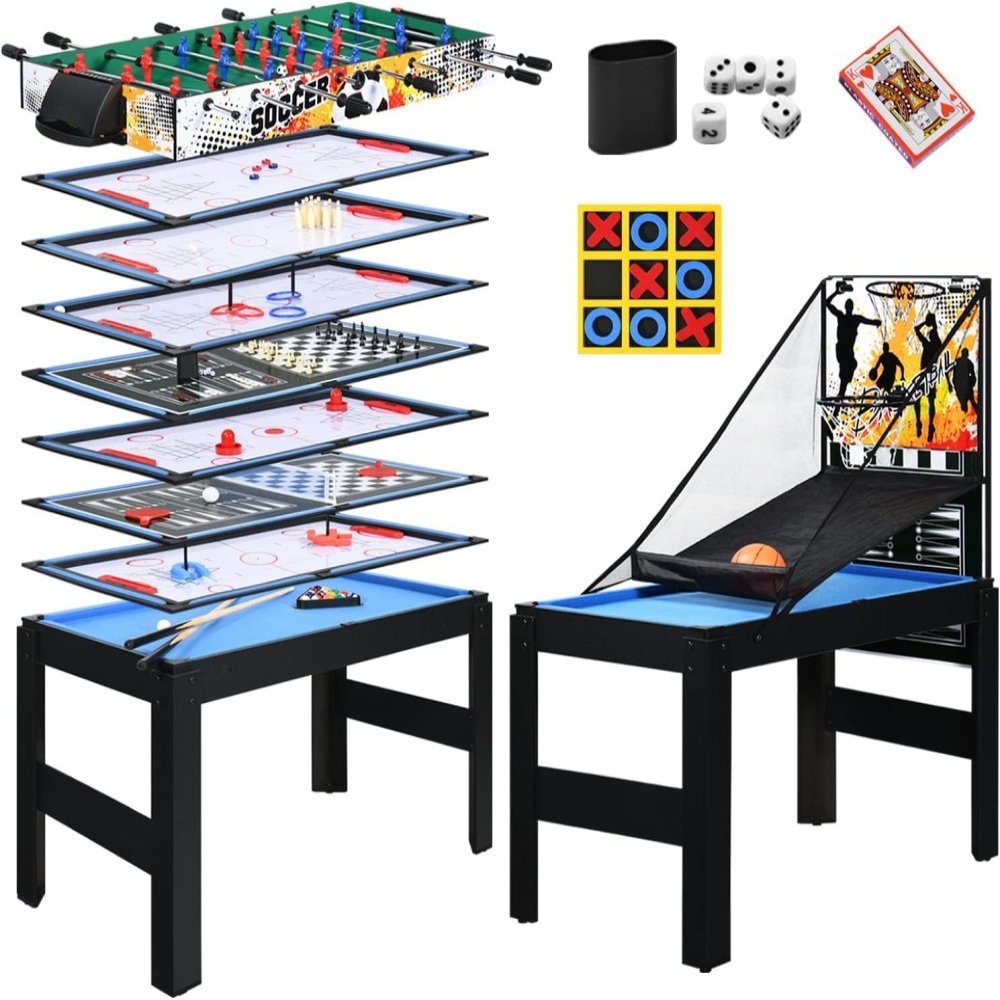
Official product composite identifies the 15-in-1 table and displayed game presentations. Its exploded arrangement does not independently confirm the number of supplied boards or a packing list.
A game count is not a physical parts list
Ruiqing Leisure’s 4FT 15-In-1 Multi-Game Table listing names fifteen games and states that accessories are included. For a buyer comparing wholesale multi-game tables, the useful next question is how those game names correspond to the actual proposed boards, table parts and loose pieces.
Fifteen named games do not necessarily mean fifteen separate playing boards. Some arrangements may use shared components, while another game may need additional loose accessories. Ask the supplier to explain the proposal with a game-to-parts matrix. That provides a clearer purchasing scope than treating the headline number as a complete inventory.
Retain the supplier’s game names first
Copy the supplier’s game list into separate rows before combining or translating the names. The inspected page names familiar games such as billiards, foosball, chess and bowling, but also uses terms including “ice table,” “horse foot” and “Shuffle game.” Ask the supplier to identify the intended arrangement where a name needs clarification.
Keep a confirmed explanation beside the original term. A buyer should not silently turn an unclear label into a different game or a specific mechanism. For example, a game name alone does not establish whether a powered component is included. This matrix is about identifying the actual offered configuration, not inferring its operation from a familiar description.
Use one row for every supplier-named game.
Link the name to its proposed playing surface.
Identify shared and game-specific components.
Retain unresolved names until the supplier explains them.
Supplier-posted collage presents several game arrangements. The displayed brand and game names remain catalogue references, not proof of authorization, performance or the exact quoted configuration.
Give the playing surfaces their own references
Ask the supplier to identify the base table and each separate surface or board proposed for the set. Request a reference for each physical item. If two game rows use the same component, show that relationship explicitly rather than counting the item twice. If opposite faces are involved, ask the supplier to identify those faces.
The catalogue composite presents several game arrangements, but an exploded illustration is not a dimensioned assembly or an independently checked inventory. Use the image to ask which parts are represented. Keep a proposed substitution or changed board separate until the supplier explains which game rows it affects.
Use a game-to-parts enquiry matrix
The table below is a request format. Its cells identify the response to obtain, not a completed allocation supplied by this article. Extend it to every game on the proposal and retain the supplier’s item references and quantities alongside the relevant row.
Game row
Surface reference requested
Loose-parts response requested
Billiard
Proposed table or playing surface
Named accessories and quantities
Chess
Board identity and any shared face
Piece-set reference and contents
Ring toss
Proposed playing arrangement
Target and ring references as offered
Unclear catalogue term
Supplier explanation and selected view
Parts supporting the confirmed game
The page’s accessory chart is a starting reference for an itemised supplier response. Graphic labels and pictured quantities are not treated here as a verified contents count.
Itemise the loose accessories
Ask for one consolidated accessory list linked back to the game rows. Separate a set of pieces from an individual piece and request the proposed quantities in clear units. Where an accessory serves more than one game, identify it once in the physical inventory and cross-reference its uses in the matrix.
The supplier-posted accessory chart helps locate the items being discussed. It should lead to a written response rather than a count estimated from the graphic. Ask the supplier to name any pictured item that is illustrative, optional or supplied differently in the quoted version. Keep that qualification with the affected game row.
Check the matrix against an identified submission
Request an identified sample or product-specific submission that shows the proposed table, surfaces and accessories. Compare the returned list with the same game rows used in the enquiry. Record missing identities or unanswered allocation questions before describing the set as complete.
An inventory review does not establish game performance, age suitability or a completed assembly evaluation. Keep those requirements separate where needed. Once the supplier’s contents proposal is clear, retain the matrix, consolidated parts list and quotation version together. Send the game rows and open questions through the Ruiqing contact page.
15-in-1 table purchasing questions
Does fifteen games mean fifteen boards?
Ask for the physical allocation. Shared components or faces should be identified explicitly rather than inferred from the game count or catalogue illustration.
Is all accessories included an itemised list?
It is a broad supplier statement. Request actual item references and quantities linked to the offered game arrangements.
What if a game name is unclear?
Preserve the original term and ask the supplier to show the intended arrangement. Keep its explanation with the parts matrix before comparing the quotation with another set.
Multi-Game TablesIncluded PartsGame-to-Parts Matrix